




Kenya’s most unconventional conservation fundraiser is shifting into high gear—and heading north. The 37th Rhino Charge will take place in Samburu County from 29th–31st May 2026, marking yet another time this iconic event has ventured into Kenya’s northern rangelands.
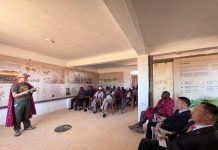
The announcement came during a Drivers’ Briefing at Braeburn School, Nairobi, where Clerk of Course Don White revealed that all 65 competition slots have been filled. Seven new entrants will debut this year, signalling growing relevance among younger conservationists and motorsport enthusiasts alike.
“We have seven new entrants to the Rhino Charge this year, which signifies growing relevance to the new generation,” White said. “This not only makes the event more sustainable but also helps us operate at full house.”
Since its founding in 1989, the Rhino Charge has raised over KES 2.7 billion for Rhino Ark Kenya Charitable Trust, transforming it into one of Africa’s most successful fundraising platforms. The 2024 edition alone generated KES 325 million—the highest single-year total to date.
Those funds have delivered measurable results: 853 kilometres of game-proof electric fencing, protection of 652,000 hectares of montane forest ecosystems, and a 95–98 per cent reduction in human-wildlife conflict within fenced areas. Over 90,000 households now enjoy direct protection from crop raiding and livestock predation.
Rhino Ark CEO Christian Lambrechts highlighted recent progress in the Southern Mau Forest, a 158,000-hectare indigenous catchment feeding the Mara, Sondu, and Ewaso Nyiro South rivers. A new field office in Olenguruone now coordinates EU-supported conservation programmes, while partnership with private sector entities has completed a 32-kilometre fence along the South Western Mau’s northern boundary.
On Mount Kenya, 318 kilometres of fencing are complete; in Kakamega, 50 of 117 planned kilometres have been constructed.
This year’s Samburu setting offers more than dramatic arid scenery. The county hosts the “Special Five”—Grevy’s zebra, gerenuk, Somali ostrich, Beisa oryx, and reticulated giraffe—species uniquely adapted to northern Kenya’s ecosystems. For communities living alongside wildlife, the Rhino Charge’s upstream forest protection directly sustains downstream dryland livelihoods.
A new Classic Charge category has been introduced alongside the main competition, offering 10 places for newcomers. While fees and pledges differ, all participants share the same safety, camping, and venue rules. As always, no tickets will be sold at the gate—advance purchase via www.rhino-charge.org is mandatory.
The exact competition location remains a closely guarded secret until 6am on May 26, when route notes will be issued. What is certain: this iconic event, where speed is penalised and strategy rewarded, has found a fitting new home in Kenya’s northern gem.