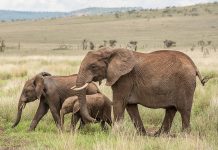

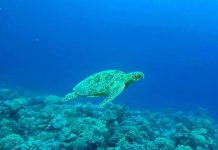



Kenya wildlife Service officials are carrying out an exercise to identify elephants’ reaction to the Standard Gauge Railway (SGR) encroaching through Tsavo National Park.
Elephants from both sides of the park will be collared to scientifically monitor how they adapt to the railway.
The operation will be done mainly through aerial teams, with a KWS helicopter leading the darting operation, backed by KWS veterinary and capture staff and STE collaring specialists.
The four-day exercise seeks to understand how elephant movements will be influenced by the elevated sections of the railway within the Tsavo conservation area.
The exercise is the start of a joint project initiated by the Kenya Wildlife Service with the group Save the Elephants providing technical and logistical support.
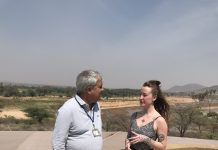
Frank Pope is the Chief Operating Officer for Save the Elephants in Kenya.
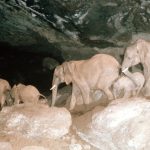
“This is the first time this is being done with respect to infrastructure. So what we are trying to do is figure out how elephants are responding to this new high speed railway line that has been put through, which is cutting between Tsavo East and Tsavo West national parks. There have been underpasses put under this railway and what we want to do is see how elephants are responding to these underpasses,” Pope said.
A 133 km section of the 609 km high-speed railway passing through the Tsavo Conservation Area is being raised above the normal terrain levels so that elephants would pass down.
Kenya has had in many reserves both animals and humans stay together. Over the last decade, wildlife has been under pressure from rapid growth and human encroachment.
“Luckily enough, Tsavo is still quite expansive. We have an area of more than 20,000 square kilometres, so a bit resilient in a way but still receiving a lot of pressure from human settlement and now things like the standard gauge railway, which has altered wildlife movement patterns in a way. So this brings a long human wildlife… increased escalation in human wildlife conflict cases, whereby you will find elephants crop raiding in areas that they didn’t used to to begin with or just the total increase in conflict cases,” said KWS elephant programme director, Sospeter Kiambi.
Kenya’s game parks and abundant wildlife draw tourists from across the globe but the government has said that must not stop the east African nation from building infrastructure to speed up development.
Originally, the SGR was to run parallel to the old line, and on the fringes of the park.
Conservationists unsuccessfully went up in arms against the realignment of the line to pass through the national park instead of the initial route in which it would have displaced high-value properties that the government estimated would have cost billions of shillings in compensation payments. (Source; Africa News)