



By Santiago Legarre
Ashnil Hotels has recently added another Surana to its collection of lodges. Following the launch of Surana Buffalo Springs in 2023 – the first property in the Surana Luxury Collection – came Surana Mara Camp in 2026.
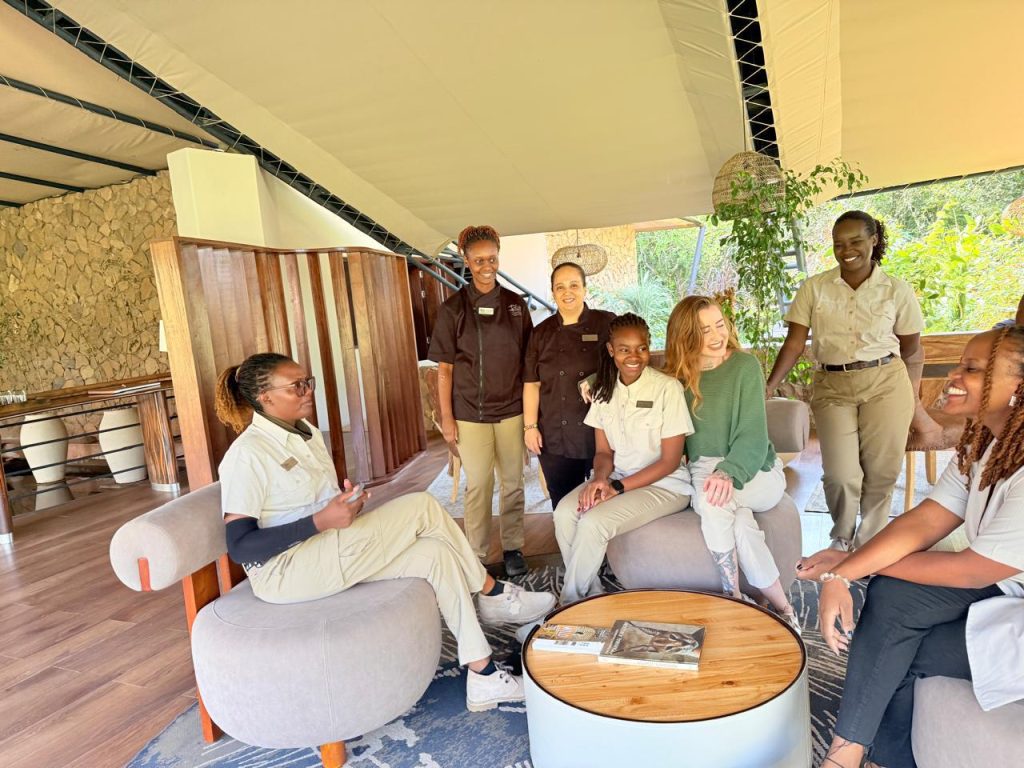
There are many things that distinguish this new camp, but one feature stands out: the unusually strong presence of women in key roles, from guiding and wellness to the kitchen and management. It is a refreshing reminder that the safari industry, traditionally perceived as a male domain, is changing.
Beauty and the bush
Let me start with Lucy Mantaine, Surana Mara’s guide and one of only a dozen female guides in the Maasai Mara National Reserve. Lucy comes from Aitong in Narok County and followed in the footsteps of her father, himself one of the Mara’s accomplished guides.
After training at the Wildlife Tourism College in nearby Pardamat, Lucy was offered a position by Ashnil straight out of college. She appreciated the opportunity, knowing that women entering the guiding profession can still encounter prejudice.
She has been asked questions that male guides are unlikely to face: “Can you manage a puncture?” and, even more incredulously, “You can tell us about the wildlife, but can you really drive?”
Lucy does not seem particularly troubled by such doubts. Her experience, work ethic and easy charm speak for themselves. If I return to Surana Mara, as I certainly hope to, I will have no hesitation in asking her to be my guide.
Savannah wellness
Another woman at the heart of the Surana Mara experience is Ashley Roberts, who heads Ashnil’s newly established Wellness Department.
Ashley was trained in Cape Town and Johannesburg and worked in South Africa before moving to Kenya. She brought with her an approach to wellbeing known as PEEMS – Physical, Emotional, Energetic, Mental and Spiritual wellbeing. In Kenya, this has evolved into “Wellness in the Wild”, her approach to adapting holistic wellness to the safari environment.
What I find particularly interesting is that the programme goes beyond the conventional yoga session or massage that has become a standard feature of many safari lodges. While Surana Mara offers these familiar amenities, Wellness in the Wild takes a broader view of wellbeing, extending its focus to both guests and staff.
That is an approach worth acknowledging. A hospitality business depends as much on the wellbeing and motivation of its employees as it does on the comfort of its guests, and a programme that recognises this can only be a positive development.
A chef and a manager
Two other women play important roles in the Surana Mara story.
Chef Cheryl Booysen, like Ashley, comes from South Africa. Her appointment challenges another familiar stereotype: that while women traditionally do much of the cooking at home, professional kitchens are predominantly the preserve of men.
I can offer some personal evidence against that assumption. The food I experienced at Surana Mara was among the most memorable I have encountered on safari.
Then there is Grace Asiyo, the general manager overseeing both of Ashnil’s Mara properties – Surana Mara Camp and its predecessor, Ashnil Mara Camp.
Grace brings warmth and an engaging personality to the role. At Surana Mara, she is supported by manager Elias, whose characteristic sense of humour adds to the relaxed atmosphere that guests experience at the camp.
Together, they are part of what makes Surana Mara more than simply another safari lodge.
Women in the air
And there was one final reminder of the changing face of the safari experience.
I flew to the Mara with Safarilink, and my pilots were Doris and Grace.
By then, I was hardly surprised to find women playing yet another important role in my journey to the Mara. Even the airline’s leadership continues the pattern: Safarilink is headed by Managing Director Anu, another woman at the helm of a business that is an important part of Kenya’s safari industry.
Perhaps that is the real story of Surana Mara. The women I encountered there are not simply adding a “feminine touch” to the experience. They are guides, managers, chefs, wellness practitioners and pilots – professionals whose skills and personalities are helping to shape contemporary safari tourism.
And that, in itself, is something worth celebrating.